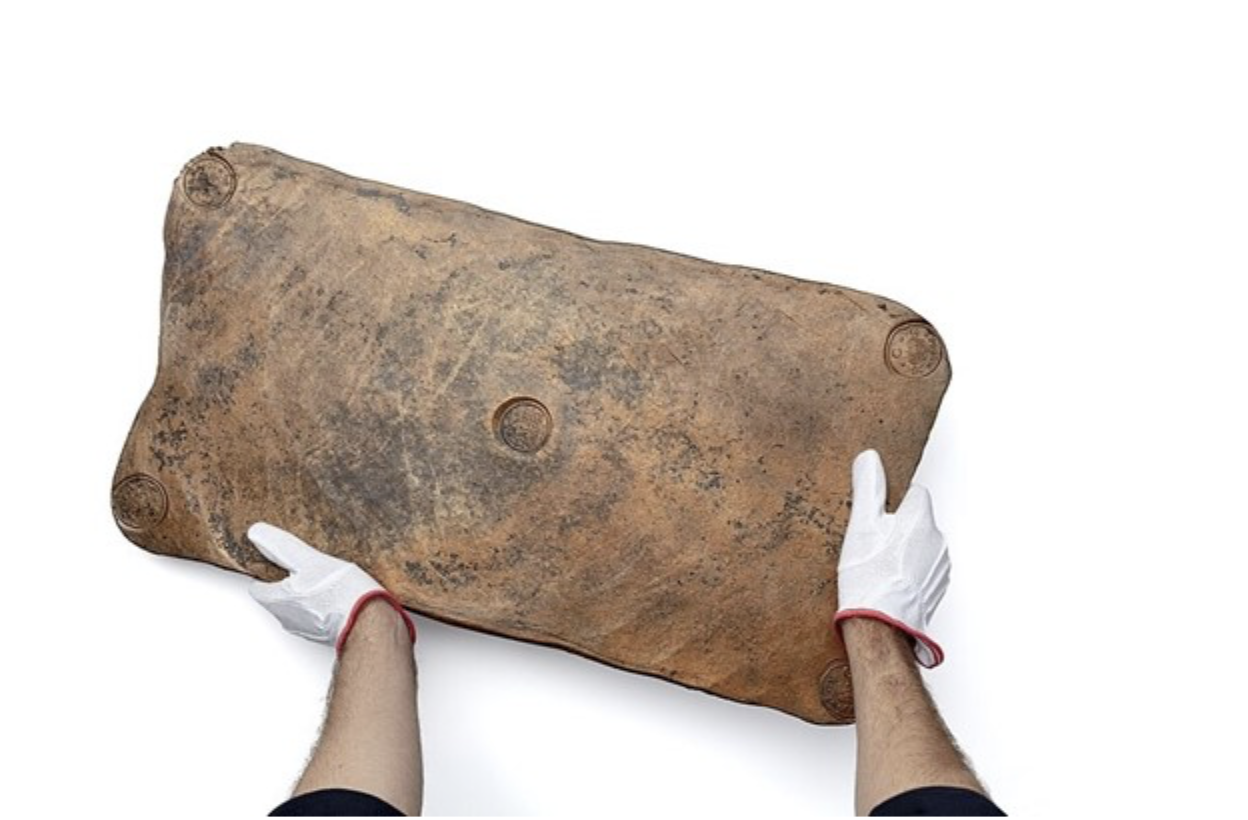
The copper standard money, weighing almost 20kg, Economy Museum, Royal Coin Cabinet. Credit: Jens Mohr, National Historical Museums of Sweden.
Then, in 1660, the government started to do something new to solve this case. They started to mint new, lighter coins by making them comfortable to carry or keep. Many customers wanted their old copper plates back for their metal value, but since they all came knocking at the same time to get their money back, a run on the bank ensued. However, the problem was solved by financier Johan Palmstruch, who came up with an ingenious solution in 1661. To counteract the impending bank run, his bank, ‘Stockholms Banco’, started to issue deposit certificates called ‘Credityf.’ These paper certificates entitled the owner to the value in coins if redeemed, but also meant the bank could lend money without necessarily having it deposited. So that's how Credityf became the first \ European banknote, making a huge innovation in the Banking system. photo An early example of a Bank of England banknote, known as a running cash note, from 1697. Bank of England Museum: “Credityf” So what do central banks do? They are responsible for implementing monetary policy, managing the currency of a country or group of countries, and controlling the money supply. They control monetary policy by setting interest rates to fight inflation or support economic growth, regulate how much money circulates in the economy, and issue national currency. Central banks also oversee the banking system and payment networks to ensure they function properly, provide emergency loans to commercial banks when needed to prevent financial crises, manage foreign reserves and exchange rate stability, and offer economic research and advice. Importantly, they operate independently from day-to-day politics, so they can focus on maintaining price stability and overall economic confidence.